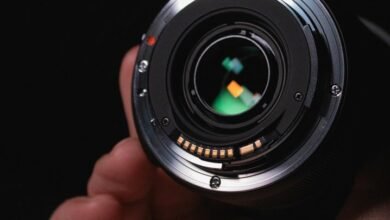
The Pioneer Reach 7146059251 Prism Horizon appears as a cautiously described venture, its exact nature uncertain. Analysts label it a blend of technology and narrative without verifiable evidence. The project signals ambitious aims and refractions of potential, yet remains largely speculative. It invites careful, evidence-based inquiry and hands-on testing. What practical implications, if any, emerge from disciplined investigation? The outcome may hinge on reproducible results and verifiable demonstrations.
What Is the Pioneer Reach 7146059251 Prism Horizon?
The Pioneer Reach 7146059251 Prism Horizon refers to a purported development or product, though its exact nature remains unclear. Analysts describe it as an uncertain convergence of technology and narrative, with claims lacking verifiable evidence.
The term “pioneer reach” signals aspirational aims, while “prism horizon” suggests a refracted potential. Skeptical scrutiny, not hype, should guide interpretation and freedom-minded inquiry.
How the Prism Horizon Enables Hands-On Exploration
How does the Prism Horizon translate abstract concepts into tangible investigation, and what practical methods does it offer for hands-on exploration? The device presents modular tasks and iterative prompts, permitting controlled experimentation without dogma. Its design favors skepticism over spectacle, enabling exploration driven by evidence. Students engage directly, testing hypotheses, comparing results, and refining approaches—freedom through disciplined inquiry, not passive reception.


Key Features and Specs That Matter for Makers and Educators
Plexus Prism Horizon coils its capabilities into a compact suite of features tailored for makers and educators. The device presents modular hardware, precise sensors, and open interfaces, enabling reproducible experiments. Specifications emphasize durability and interoperability, not marketing flourish.
It supports hands on exploration, transparent data, and configurable curricula. Critical assessment notes potential friction with proprietary tooling and ambiguous project outcomes.
Real-World Use Cases: Tinkering, Learning, and Project Outcomes
Real-world use cases for the Plexus Prism Horizon demonstrate how tinkering, structured learning, and project outcomes intersect with hardware modularity and transparent data access.
The evaluation remains skeptical yet objective, noting disciplined tinkering concepts that reveal limits and potential.
Learning outcomes and project outcomes hinge on hands on exploration, yet require clear metrics, reproducibility, and disciplined iteration for meaningful freedom.
Conclusion
In a quiet harbor, the Prism Horizon is a lighthouse whose beam wanders the fog. Ships glimpse promise—plans, prototypes, quizzes of possibility—yet each flash dissolves into sea spray of ambiguity. The beacon invites hands to chart currents, but its map remains unsigned. Skeptics note shoals of unverifiable claims; practitioners test with care. If trustworthy, the horizon will steady into verifiable wind, guiding makers through disciplined exploration rather than mirage-driven zeal.