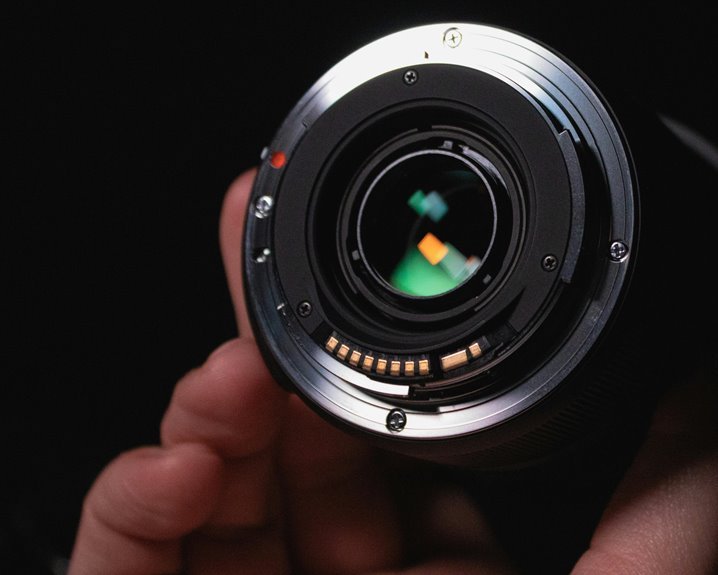
The Enhance Reach 6824000859 Lens Pulse optimizes optical throughput and adaptive processing to extend distant-object clarity with lower latency. It reallocates bandwidth to critical frames while preserving spectral integrity and energy efficiency across conditions. The design supports surveillance, wildlife, and industrial inspection with automated calibration and standardized interfaces. Field deployments are meant to be repeatable and robust, yet practical questions remain about fault recovery and real-world performance under variable environments.
What the Enhance Reach 6824000859 Lens Pulse Delivers
The Enhance Reach 6824000859 Lens Pulse delivers expanded visual reach and faster detection capabilities, enabling users to monitor distant objects with improved clarity and reduced latency.
It systematically addresses edge cases through adaptive processing, while latency optimization techniques minimize delays across varying conditions.
The design emphasizes modular, scalable sensing, ensuring dependable performance for freedom-minded professionals seeking reliable, immediate situational awareness.


How Lens Pulse Boosts Long-Distance Clarity and Speed
Lens Pulse accelerates long-distance clarity and speed by optimizing optical throughput and processing latency. It emphasizes modular signal paths, reducing bottlenecks and preserving spectral integrity over extended ranges. Enhanced algorithms reallocate bandwidth to critical frames, enabling steadier focus and lower jitter. The result: enhanced reach and resilience, with Lens pulse delivering measurable throughput gains while maintaining energy efficiency and predictable performance under variable conditions.
Use Cases: Surveillance, Wildlife, and Industrial Inspection
Use cases for Lens Pulse span three primary domains—surveillance, wildlife monitoring, and industrial inspection. In surveillance, robust resolution and latency reductions support real-time anomaly detection while triggering surveillance ethics discussions.
Wildlife monitoring benefits from nonintrusive data capture and clear privacy boundaries, addressing wildlife privacy concerns.
Industrial inspection leverages automated defect spotting, reducing downtime with precise, field-ready analytics. Freedom-respecting, objective evaluation underpins deployment strategies.
Practical Setup, Tips, and Troubleshooting for Field Deployments
Practical setup for Lens Pulse deployments emphasizes repeatable, field-ready configurations that minimize downtime and maximize data integrity.
The analysis focuses on practical deployment approaches, standardized hardware interfaces, and batch-config reproducibility.
Field troubleshooting procedures are documented with clear fault codes and recovery steps.
Equipment calibration routines are automated where possible, and environmental considerations are integrated to sustain reliability in variable conditions.
Conclusion
The theory that sharper long-range imagery hinges on precisely balanced throughput and adaptive processing finds support here. Lens Pulse demonstrates how reallocating bandwidth to critical frames maintains spectral integrity while reducing latency, enabling clearer distant-object monitoring. In field deployments, automated calibration and robust fault recovery translate to repeatable performance across conditions. While real-world gains depend on integration quality, the underlying principle—smart resource allocation for essential frames—consistently yields more reliable, actionable visuals at distance.